
Employee Shuttle Operations
DEWA Shuttle Bus Service Dubai – Royal Rider
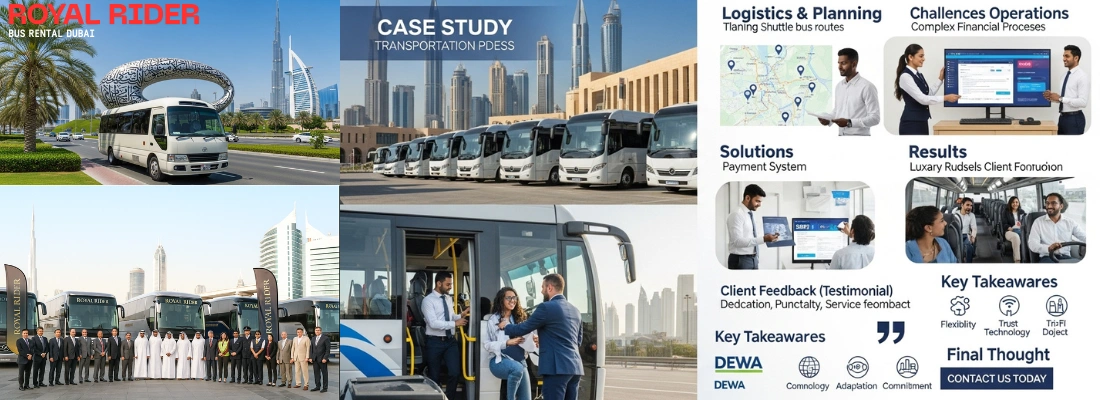
Royal Rider supported an employee shuttle project involving Dubai Electricity and Water Authority (DEWA). The operational work included developing pickup points, testing routes, refining timings, coordinating buses and drivers, and adapting administrative processes to an enterprise procurement workflow.
Quick Answer
What Was Royal Rider’s Role in the Shuttle Project?
Shuttle Operations
How a New Employee Shuttle Network Is Developed
Follow the process from employee transport requirements to a more stable recurring operation.
Project Overview
More Than Assigning Buses to Employees
A new staff shuttle operation begins with a transport problem, not with a vehicle. Employees may live in different parts of Dubai, workplaces can have fixed reporting times, and suitable bus pickup areas do not always match the most convenient point for every individual.
Royal Rider worked through these operational questions while planning and operating the employee transport requirement. Instead of treating the first proposed route as final, pickup points and timings were tested and adjusted as the operation developed.
For other employers, a new shuttle network works best as a managed route-development project rather than a simple monthly bus booking.
Initial Requirement
Build a Recurring Employee Transport System
Employee Access
Pickup points needed to be practical for staff while remaining suitable for buses and the overall route.
Workplace Reporting Times
Routes had to work backward from required arrival times rather than simply choosing convenient departure times.
Repeatable Daily Operation
A route that works once is not necessarily a good monthly route. The schedule needed to be practical for recurring use.
Administrative Coordination
Transport delivery also needed to fit the client’s procurement, purchase-order and invoicing processes.
Route Development
How Employee Pickup Routes Can Be Built
| Step | Operational Purpose |
|---|---|
| 1. Collect employee areas | Understand where the passengers assigned to each shift are coming from. |
| 2. Group practical zones | Identify employees who can reasonably use common pickup areas. |
| 3. Check bus access | Confirm roads, stopping areas, turning space and workplace entry requirements. |
| 4. Build route sequence | Reduce unnecessary backtracking while keeping pickup points usable. |
| 5. Estimate reporting schedule | Work backward from the required workplace arrival time. |
| 6. Conduct trial operation | Test real road conditions, stop sequence and passenger boarding. |
| 7. Refine stops and timings | Adjust where actual operation shows a practical need. |
| 8. Document stable schedule | Give employees, drivers and operations teams one controlled route plan. |
| 9. Continue monitoring | Review recurring issues rather than assuming the route will never need adjustment. |
Trial Operations
A Map Cannot Show Every Route Problem
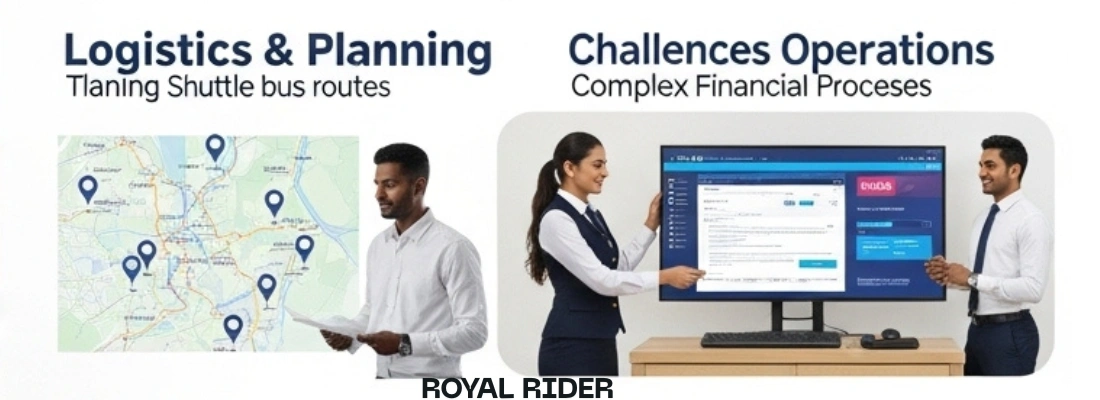
Route-planning software and maps are useful starting points, but recurring staff transport has to work on real roads at real shift times. A proposed stop may be difficult for a bus to access, boarding may take longer than expected, or traffic conditions may change the practical sequence.
Royal Rider conducted route trials and adjusted pickup arrangements as the shuttle operation developed. That refinement process is a normal part of establishing a new network when the final transport map is not already defined.
Changes should be controlled and communicated. Moving a pickup point without updating drivers and employees can create a new problem while trying to solve another one.
Schedule Refinement
Build the Timetable Around the Required Arrival
Recurring transport should have a clear timing structure without promising that road conditions can never cause delay.
Reporting Time
Start with when employees need to be at the workplace or project location.
Boarding Allowance
Multiple pickup points require realistic time for passenger boarding rather than drive time alone.
Traffic Conditions
Test the route during comparable operating periods where possible.
Return Movement
Shift finish times and return pickups need their own operating plan.
Route Changes
Significant changes should be reviewed for timing, mileage and commercial impact.
No Absolute Guarantee
Traffic, incidents, weather and access restrictions remain outside a transport provider’s complete control.
Fleet Allocation
Choose Vehicle Size Route by Route
| Vehicle Band | Potential Shuttle Role | Planning Consideration |
|---|---|---|
| 7–15 Seater | Small teams, feeder routes, split shifts | Useful where passenger volume or access does not justify a larger bus. |
| 20–24 Seater | Medium employee groups | Balance route demand with practical pickup access. |
| 26–35 Seater | Larger recurring routes | Check stop access, passenger demand and shift pattern. |
| 40–53 Seater | High-volume staff movements | Requires suitable roads, pickup areas and workplace access. |
The best vehicle is not automatically the largest one. Royal Rider can compare suitable options from its fleet after passenger numbers, routes and shift times are defined.
Daily Operations
What Keeps a Recurring Shuttle Organized?
Driver Briefing
Drivers need the current route, pickup sequence, timings, workplace instructions and operations contacts.
Controlled Route Information
Employees and drivers should work from the same confirmed pickup points and schedule.
Attendance Patterns
Persistent changes in route demand can indicate that vehicle allocation or stops should be reviewed.
Operations Communication
Traffic issues, access changes and service adjustments need a clear escalation process.
Vehicle Readiness
Recurring operations require planned vehicle checks and maintenance around the transport schedule.
Documented Changes
Material route or schedule changes should be agreed rather than introduced informally.
Enterprise Administration
Transport Operations and Procurement Need to Work Together
Service Continuity
Plan for Operational Changes Before They Happen
Route Disruption
Roadworks, closures or access changes may require a temporary route adjustment and clear communication.
Vehicle Requirements
Maintenance and fleet allocation should be managed around the recurring schedule. Any replacement arrangement depends on the agreed service plan and availability.
Shift Changes
New reporting times can affect every pickup on a route and should be reassessed before implementation.
Passenger Demand
Material increases or decreases in employee numbers can justify changing vehicle capacity or route structure.
Operational Lessons
What Large Employers Can Take From This Project
✔
Design Routes From Employee Data
Vehicle selection should follow passenger geography and shift requirements, not come first.
✔
Expect a Refinement Period
A newly created network may need controlled adjustments after real-world trial operation.
✔
Balance Convenience and Efficiency
Too many door-to-door-style stops can make a shared route impractical.
✔
Keep Operations and Admin Connected
Purchase orders, invoicing and service documentation should be designed alongside transport delivery.
✔
Control Route Changes
Drivers, employees and client coordinators need one current version of the schedule.
✔
Measure What Transport Can Control
Review route timing and vehicle utilization without claiming that transport alone guarantees productivity or attendance outcomes.
Planning a Staff Shuttle
Information to Prepare Before Requesting a Route Proposal
| Information | Why Royal Rider Needs It |
|---|---|
| Employee count by shift | Helps determine route demand and vehicle capacity. |
| Approximate pickup areas | Allows practical zones and route sequences to be assessed. |
| Workplace locations | Defines destinations, access and reporting requirements. |
| Shift start / finish times | Determines outbound and return schedules. |
| Operating days | Supports daily, weekly or monthly service planning. |
| Contract period | Helps structure fleet allocation and commercial terms. |
| Special access requirements | Identifies permits, security procedures or vehicle restrictions that may affect operation. |
| Reporting requirements | Allows any agreed transport documentation or reporting process to be scoped. |
For Other Employers
The Same Route-Planning Principles Apply Beyond One Project
A well-designed employee shuttle is built around where people travel from, when they must arrive and which pickup points a bus can serve efficiently. These principles can support offices, hotels, industrial operations, project sites and other organizations planning recurring bus rental in Dubai with drivers.
The objective is not to promise a perfect route on day one. It is to create a controlled transport plan, test it in operation, refine justified issues and maintain clear communication as the service develops.
Get an Instant Transport Quote
Select your journey details for an estimated price in seconds.
Select a vehicle and pickup location
Your exact fleet details will appear here.
Choose a vehicle and pickup location to view the correct city-specific fleet note.
Speak directly with the Royal Rider booking team.
Employee Shuttle FAQs
DEWA Shuttle Bus Service FAQs
Answers about route development, pickup points, trial operations, fleet planning, procurement workflows and recurring employee transport.
What did Royal Rider support in the DEWA shuttle project?
Royal Rider supported an employee shuttle project involving DEWA, including route development, pickup-point planning, schedule refinement, daily transport operations and administrative coordination.
What was Royal Rider’s role in the DEWA shuttle project?
Royal Rider’s described role included developing practical employee routes, planning pickup points and timings, operating buses with drivers, refining schedules through trial operations and coordinating the transport administration required for the project.
Does Royal Rider claim to be DEWA’s exclusive transport provider?
No. Royal Rider’s experience relates to the described employee shuttle project and does not imply exclusive, permanent or organization-wide transport-provider status.
Why was route planning important for the project?
The source project began without a fully defined employee transport map, so pickup locations, route sequences and timings had to be developed around the actual operating requirement.
How are pickup points selected for an employee shuttle?
Useful pickup points balance employee accessibility with safe bus access, route efficiency, road conditions and the time needed to reach the workplace or project location.
Why not collect every employee from home?
Door-to-door collection can make a shared route too long or operationally inefficient. Practical common pickup points can reduce detours while keeping the service accessible to employees.
What is a trial run in staff transportation?
A trial run tests the proposed route, pickup sequence, road access and timing before the schedule is treated as stable. It helps identify practical changes that may not be obvious from a map.
Can shuttle routes change after launch?
Yes. Employee attendance, road conditions, pickup demand, work timings and operational feedback can justify changes. A new shuttle network often needs a controlled refinement period.
How are shuttle timings developed?
Start from the required workplace reporting time, work backward through travel and pickup requirements, test the route in realistic traffic conditions and adjust the schedule based on actual operation.
How does Royal Rider handle multiple pickup points?
Pickup points are arranged into a practical sequence based on geography, access, passenger demand and reporting time. The route should avoid unnecessary backtracking where possible.
Can employee shuttle services cover multiple workplaces?
They can, but each workplace, shift and reporting time should be mapped carefully. Some operations are better served by separate routes rather than one vehicle attempting to cover every location.
How is the right bus size selected for staff transport?
Vehicle size should reflect the number of employees assigned to the route, expected attendance, route access and any operational requirements. Seat count should not be selected in isolation.
Can smaller vans be used for staff shuttle routes?
Yes. Smaller vehicles can be useful for lower passenger volumes, feeder routes, split shifts or locations where a large bus is not the most practical option.
Can large buses be used for employee transportation?
Yes, where passenger demand and route access justify them. Larger buses can consolidate more employees but need suitable roads, pickup areas and workplace access.
Does Royal Rider provide drivers for corporate shuttle buses?
Royal Rider’s staff shuttle services are planned as vehicle-with-driver operations. Driver schedules and operating hours should be defined in the service plan and quotation.
How are drivers briefed for recurring routes?
Drivers should receive confirmed pickup points, route sequence, reporting times, workplace access instructions and escalation contacts. Changes should be communicated through a controlled operations process.
What happens when employee attendance changes?
Attendance changes should be monitored so the operator and client can assess whether pickup points, timings or vehicle allocation need adjustment.
Can a company request daily or monthly staff transport?
Yes. Corporate transport can be structured around the actual requirement, including recurring monthly routes or shorter project-based operations.
How was SAP Ariba involved in the shuttle operation?
Royal Rider adapted its finance and administration process to the client’s SAP Ariba procurement and invoicing workflow, adding an enterprise-administration requirement alongside the transport operation.
Are DEWA-specific payment or procurement terms disclosed?
No. Client-specific commercial and payment terms are not disclosed. For large transport contracts, procurement, purchase-order and invoicing workflows should be aligned early so the operational and administration teams follow the same agreed process.
Why should procurement be planned before shuttle operations begin?
Large corporate and government projects can require purchase orders, invoicing rules, service documentation and internal approvals. Aligning these requirements early helps the transport and administration teams work from the same process.
Can Royal Rider work with enterprise procurement processes?
Royal Rider’s experience includes adapting to a digital procurement and invoicing workflow. The exact onboarding and documentation requirements should be confirmed for each client.
Does Royal Rider guarantee employees will never be late?
No. Routes and schedules can be planned and refined carefully, but traffic, road incidents, weather, access restrictions and other external factors can affect travel time.
Does a shuttle service guarantee higher employee productivity?
No. A structured shuttle can simplify employee transport, but productivity, morale and attendance depend on many factors beyond the transport provider.
Can a company change pickup points during a contract?
Changes can be assessed, but they may affect route time, mileage, vehicle allocation and price. Significant route changes should be documented and agreed rather than introduced informally.
What information is needed to design a new staff shuttle route?
Provide employee numbers, approximate pickup areas, workplace locations, shift start and finish times, operating days, contract period and any access or reporting requirements.
How long does it take to stabilize a new shuttle network?
There is no universal period. Complexity depends on the number of employees, pickup zones, routes, shifts, traffic patterns and how much operational refinement is required.
How should companies evaluate a staff shuttle after launch?
Review pickup attendance, route timing, recurring delays, stop suitability, employee feedback, vehicle utilization and schedule adherence, then make documented adjustments where justified.
Can Royal Rider plan staff transportation for private companies as well as large organizations?
Yes. The same route-planning principles can be applied to offices, hotels, factories, construction-related operations, schools, events and other organizations, with the service adapted to the actual requirement.
How can a company request a staff shuttle proposal from Royal Rider?
Send the employee count, pickup areas, workplace or project locations, shift timings, operating days, expected contract period and preferred vehicle requirements so the routes and quotation can be assessed.
Planning Employee Transport?
Ask Royal Rider to Assess Your Staff Routes
Send employee numbers, pickup areas, workplace locations, shift times, operating days and expected contract period. Royal Rider can assess the route structure and suitable vehicles before preparing a quotation.