
Group Airport Transportation
How to Plan Group Airport Transportation
Organizing an airport movement for a group means coordinating flights, passengers, luggage, terminals, vehicles, meeting points and onward travel as one plan. The process starts with the passenger list and continues through flight coordination, luggage planning, vehicle selection and the final hotel or venue drop-off.
Quick Answer
What Is the Best Way to Organize Airport Transport for a Group?
Airport Planning
Plan the Movement Step by Step
Use the sections below as a practical checklist for arrivals, departures, multiple flights, luggage-heavy groups and onward hotel or event transportation.
Step 1 — Build the Movement List
Start With the Passenger and Flight Manifest
Group airport transportation becomes much easier when the transport plan begins with a simple manifest. List each flight, scheduled time, airport, terminal, number of arriving or departing passengers and the person responsible for that part of the group. For a single family or small team this may be one line. For a conference, sports team or tour group it can contain several arrival waves spread across the day.
The manifest should separate confirmed passengers from estimated numbers. A vehicle should not be selected from an early headcount and then left unchanged after the group grows. If the final passenger number changes, review the luggage requirement and vehicle plan at the same time because additional travellers normally bring additional bags.
For larger movements, appoint one lead contact for each arrival wave and one overall coordinator. The coordinator should have the transport contact details and should be reachable after landing. This avoids a situation where many passengers separately call the driver while the group is still clearing immigration or collecting baggage.
Step 2 — Confirm the Location
Record the Exact Airport, Terminal and Flight
DXB Arrivals
For Dubai International Airport movements, record the flight number and the correct terminal. Groups on different airlines may not emerge from the same terminal or at the same time, so each arrival should be treated as its own movement until consolidation is practical.
DWC Arrivals
Al Maktoum International Airport is a separate airport from DXB. A DWC booking should be identified clearly by airport code, flight details, passenger count and onward destination. For DWC-specific transport, see DWC airport transfer.
Other UAE Airports
For Abu Dhabi, Sharjah or other UAE airport movements, use the same planning discipline: airport, flight, passenger count, luggage, coordinator and final destination. Airport-specific pickup procedures should be confirmed for the actual service rather than assumed from a Dubai itinerary.
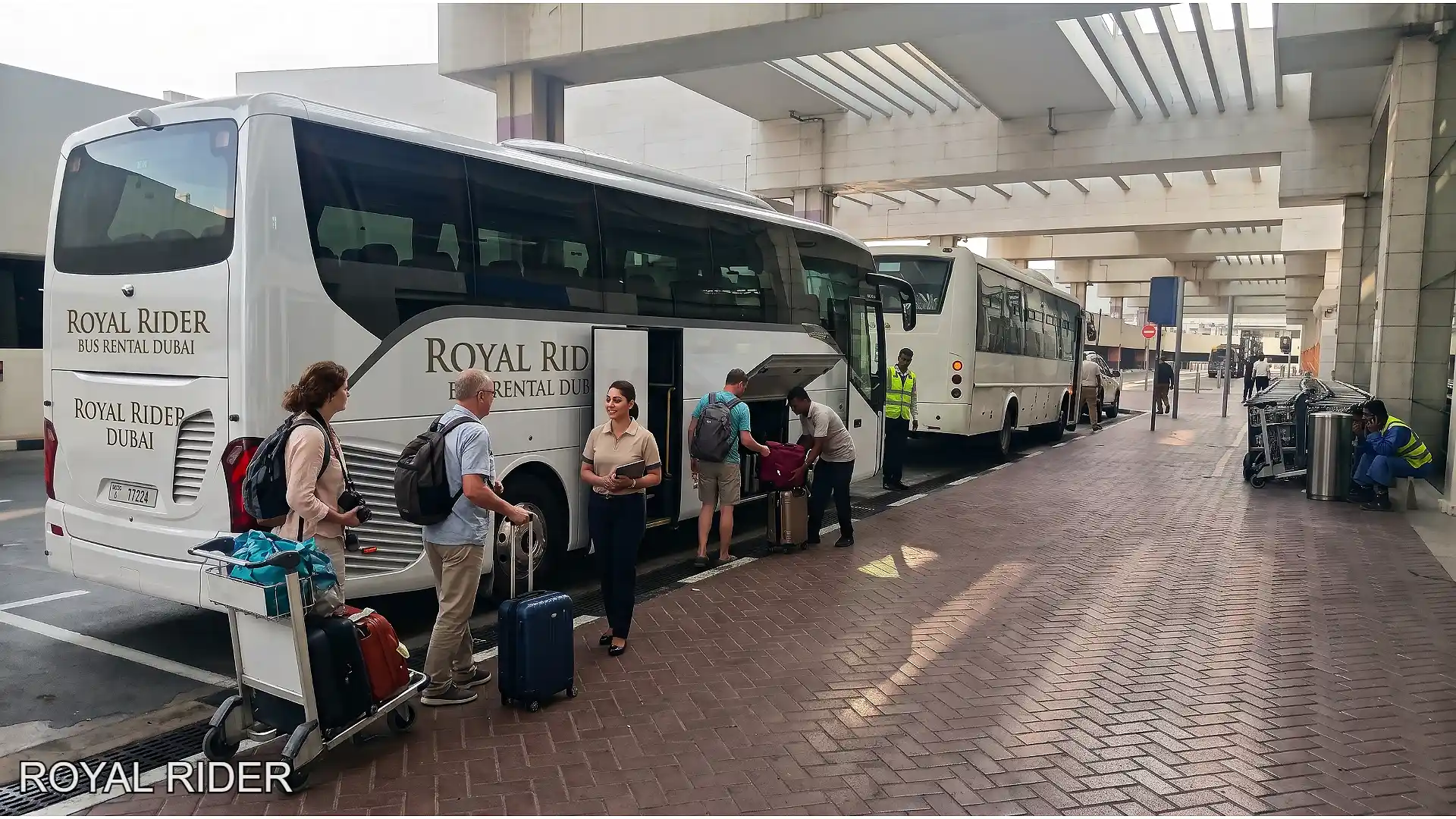
Airport Group Gallery
Passenger, Luggage and Arrival Coordination

Step 3 — Count Bags Separately
Passenger Capacity and Luggage Capacity Are Different
One of the most common planning errors is choosing a vehicle from the passenger number alone. A group of 20 people carrying small day bags is a very different airport movement from 20 international travellers carrying 20 large suitcases, cabin bags and several oversized items. Both groups need the same number of passenger seats, but they may not need the same vehicle.
Create a separate luggage count. Record large checked suitcases, cabin bags, boxes, strollers and any unusual items such as golf bags, musical instruments, exhibition materials or bicycle boxes. When oversized equipment is involved, give a description or approximate dimensions instead of counting it as an ordinary suitcase.
A larger vehicle is sometimes the practical answer, but seat count alone still does not guarantee storage space. The exact make, model and seating configuration can change the usable luggage area. For vehicle-by-vehicle luggage allowances, see Bus Luggage Capacity UAE.
Step 4 — Match the Vehicle to the Group
Choose Vehicles After You Know the People and Bags
Passenger Van
Suitable for smaller groups when the passenger and luggage load fits the assigned vehicle. A van can be efficient for families, executives and small teams, but a nearly full passenger cabin may leave less practical space for large checked baggage.
Hiace or Larger Van
Useful when a small or medium group needs more passenger capacity than a private car or compact van. The seating layout and rear storage arrangement should still be checked when every traveller has international luggage.
Coaster or Minibus
A minibus can work well for medium groups, but different configurations prioritize seats and storage differently. For airport work, select the actual vehicle around the baggage load rather than assuming that a nominal seat count tells you how many suitcases will fit.
33–35 Seater Bus
A 33–35 seater bus can suit larger tour, corporate and event groups. If the passenger count is close to the vehicle’s full seating capacity and everyone has checked luggage, confirm the assigned vehicle’s storage arrangement before finalizing the booking.
45–53 Seater Coach
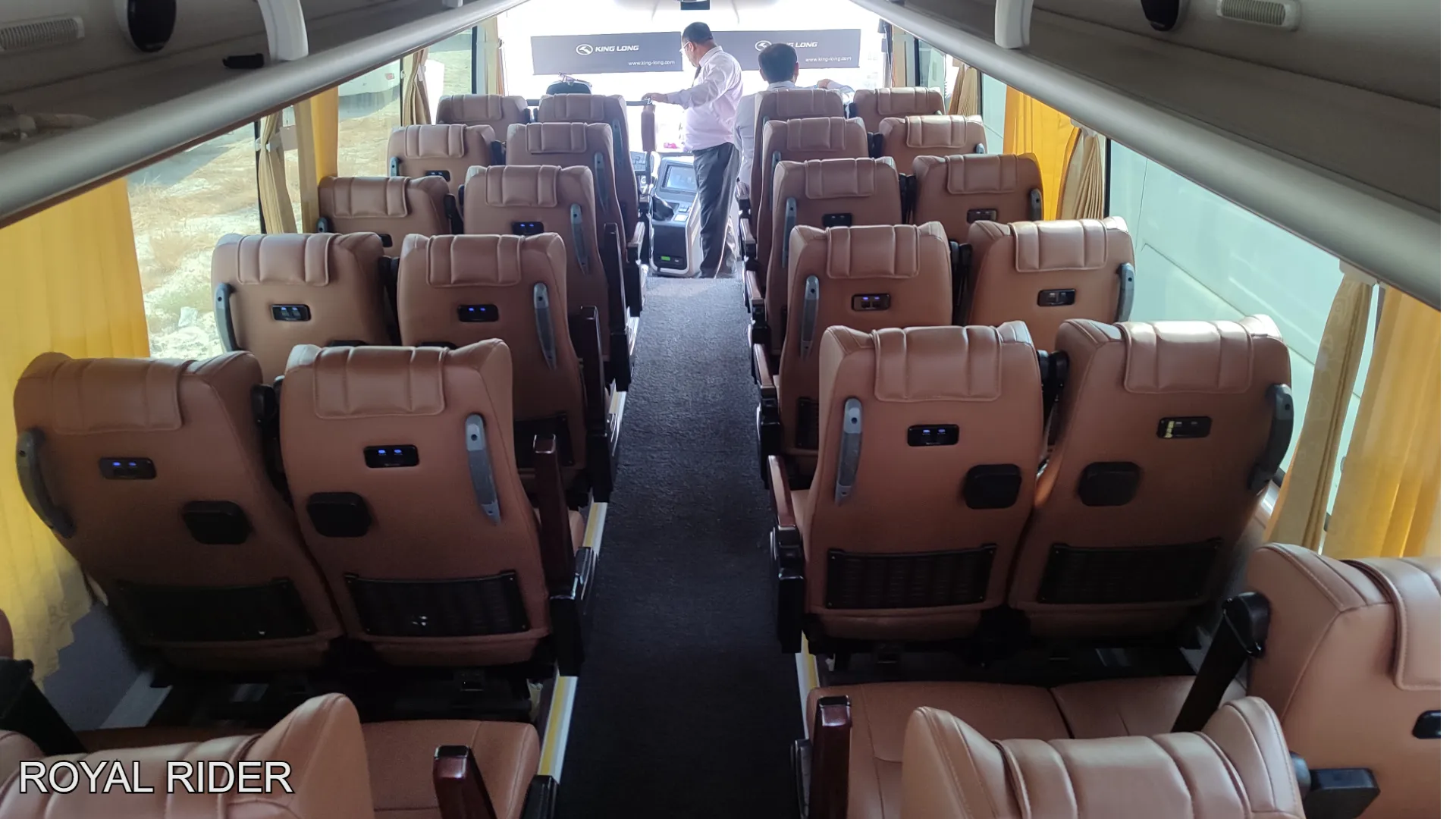
Full-size coaches are often practical for large airport groups because touring configurations can provide dedicated luggage storage. Even here, the actual baggage count matters; do not assume that 50 seats automatically means room for 50 large suitcases.
Passenger Vehicle + Luggage Support
Sports teams, production crews and exhibition groups can carry equipment that is difficult to combine with a full passenger load. In these cases, a separate luggage or cargo arrangement can be more practical than forcing all equipment into the passenger vehicle.
For customers arranging airport transport as part of tours, events, hotel movements or multi-day travel, our bus rental in Dubai service can be planned around the wider itinerary rather than treating the airport journey as an isolated movement. You can also compare available vehicles in the Fleet.
Step 5 — Plan the Arrival
A Flight Landing Is Not the Same as a Group Being Ready
From Landing to Vehicle Pickup
After a flight lands, passengers still need to leave the aircraft, complete the required arrival formalities, collect baggage and assemble the group. Large groups can take longer simply because everyone must be accounted for before the movement can begin. A transport plan that treats the scheduled landing time as the vehicle departure time creates unnecessary pressure.
The group leader should confirm when the passengers have assembled and report any missing bags or delayed travellers. For a tour or corporate group, it is usually better for the coordinator to communicate the group’s status rather than asking individual passengers to contact the driver.
Waiting and parking arrangements can affect the service, so provide accurate flight information and discuss the expected collection process when the booking is made. For Dubai-specific commercial service details, see Dubai airport transfer.
Step 6 — Coordinate Arrival Waves
How to Plan Group Transport for Multiple Flights
Flights Arriving Close Together
When flights arrive within a practical window and passengers use compatible terminals, the group may be able to consolidate after baggage collection. The plan should still identify each flight separately so the coordinator knows exactly who has arrived and who is still in the terminal.
Flights Several Hours Apart
Making the first passengers wait for a much later flight can create a poor start to the journey and tie up the vehicle unnecessarily. Separate transfer waves may be more practical when the arrival gap is large, especially when the hotel or venue is ready to receive the earlier group.
Different Terminals or Airports
Passengers arriving at different terminals should be treated as separate collection points until the transport plan confirms otherwise. Groups split between DXB and DWC require separate airport planning because they are different airports, not different terminals of one airport.
Example Planning Method
One Group, Three Flights: How to Organize It
1
Wave A — 18 Guests
Record the flight, terminal, luggage count and group leader. Decide whether this group should leave for the hotel after collection or wait for the next wave.
2
Wave B — 12 Guests
If the arrival is close to Wave A, consolidation may be practical. If delays create a long gap, the coordinator should have a clear alternative rather than keeping the entire first group waiting indefinitely.
3
Wave C — 10 Guests
A much later flight will often be easier to handle as its own transfer. This keeps the earlier passengers moving and avoids committing one vehicle for an unnecessarily long airport wait.
4
Recheck Total Luggage
Even when passenger numbers fit the planned vehicles, check the combined suitcase and equipment count for each wave before assigning the final vehicles.
Step 7 — Plan the Departure
Hotel-to-Airport Transport Needs a Different Timeline
Do Not Treat Hotel Pickup as Instant Departure
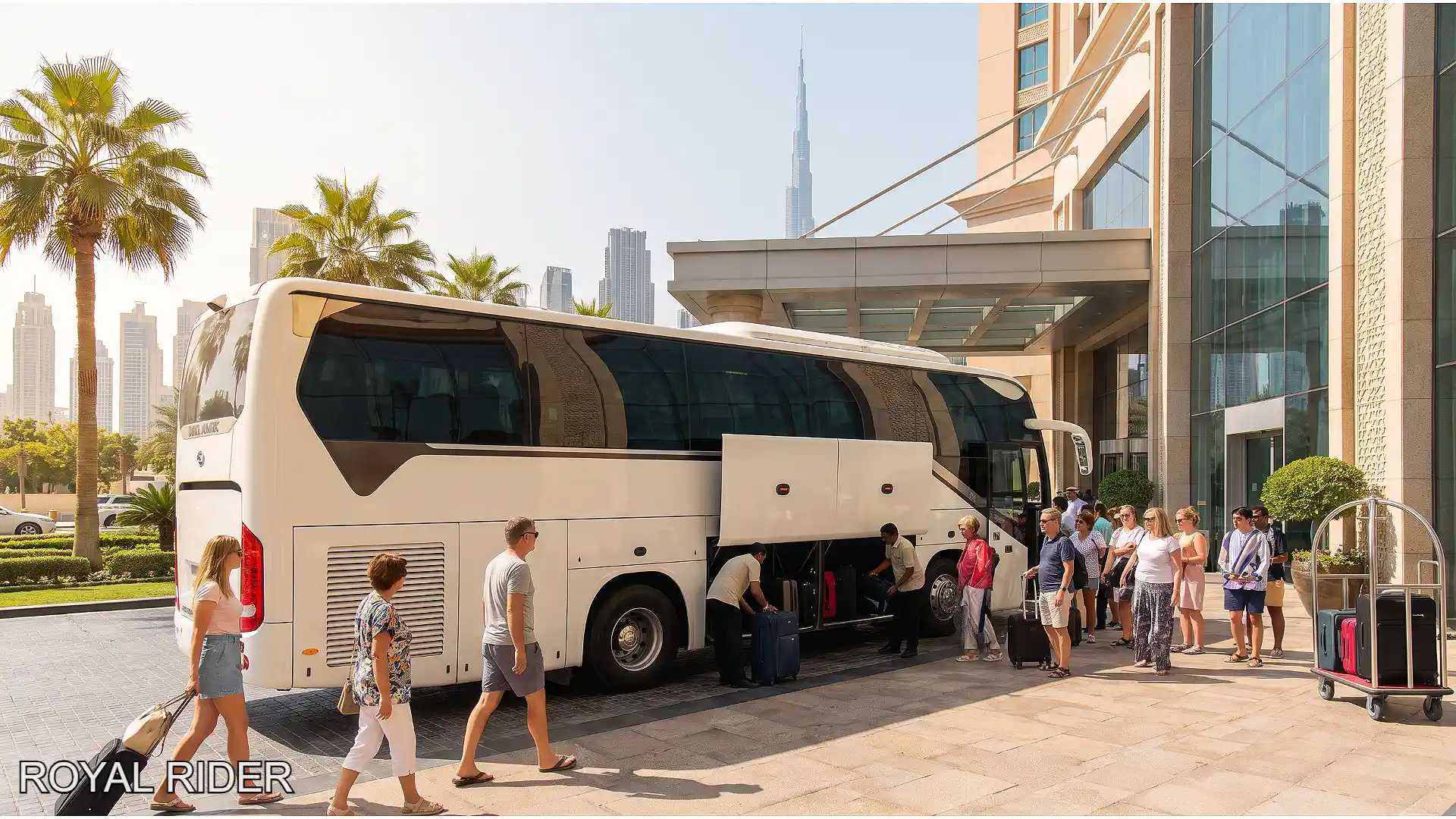
A large group may need time to check out, bring luggage to the loading area, identify missing passengers and load the vehicle. If the itinerary says the bus leaves at a particular time, the group should normally be assembled before that time rather than beginning the room-to-lobby movement at that moment.
Confirm the airport and terminal again before departure. The group coordinator should also check that all passengers and luggage are present before the vehicle leaves the hotel. If travellers are departing on substantially different flights, separate departure waves may be more practical than sending everyone to the airport together.
Step 8 — Plan What Happens After Pickup
Connect the Airport Transfer to the Wider Itinerary
The airport is often only the first movement in a group itinerary. After arrival, passengers may continue to one hotel, several hotels, a conference venue, a sports facility or another emirate. The transport company should know the final route before the airport service is priced and scheduled.
When several hotels are involved, list them in the intended drop-off order and identify how many passengers leave at each property. The same applies to departure collections from multiple hotels. Extra stops can add loading, waiting and driving time, so they should be part of the original plan rather than added after the vehicle reaches the airport.
If the same group also needs daily event shuttles, tours or intercity movements, send the complete itinerary. This allows the airport transfer to connect logically with the wider transport program while keeping each service window clear.
Common Planning Problems
Mistakes That Make Group Airport Transfers Harder
Booking by Seat Count Only
A vehicle can have enough seats and still have insufficient practical space for the group’s suitcases and equipment.
Missing Flight Details
Without the flight number, airport and terminal, the transport team has less information for coordinating the correct movement.
No Group Coordinator
Large groups are harder to manage when nobody is responsible for confirming that passengers have assembled and are ready to move.
Assuming Landing Means Ready
Passengers still need to complete arrival procedures, collect baggage and assemble after the aircraft reaches the airport.
Combining Flights With Large Time Gaps
Waiting to fill one coach can be less practical than moving passengers in separate waves when flights are several hours apart.
Adding Stops at the Last Minute
Multiple hotels, offices or venues should be included in the route from the beginning because they affect time and vehicle scheduling.
Final Booking Checklist
Send These Details Before the Airport Transfer
✔
Flight Details
Airport, terminal, airline, flight number, date and scheduled arrival or departure time.
✔
Passenger Manifest
Number of travellers in each flight wave and any separate VIP, family, staff or team movements.
✔
Luggage Count
Large suitcases, cabin bags, boxes, strollers and oversized sports or event equipment.
✔
Onward Route
Hotel, residence, office, venue or inter-emirate destination, including every planned stop.
✔
Group Contact
Name and mobile number of the person who will coordinate the passengers at the airport or hotel.
✔
Return & Additional Movements
Departure transfer, event shuttle, tour or multi-day requirements that should be coordinated with the airport service.
Once the itinerary is clear, compare fleet options, review current rates, or send the complete movement details for a trip-specific quotation.
Frequently Asked Questions
Group Airport Transportation Planning FAQs
Answers to practical questions about manifests, luggage, vehicle selection, multiple flights, delays and airport-to-hotel group movements.
How do I plan airport transportation for a large group?
Start with the flight list, exact airport and terminal, passenger count, luggage count and final destination. Then group passengers by arrival or departure time, choose vehicles around both people and baggage, nominate one coordinator and send the complete movement plan to the transport company before the service date.
What information should I provide when booking group airport transportation?
Provide the service date, airport, terminal, airline and flight number, scheduled arrival or departure time, passenger count, large suitcase count, cabin bags, oversized items, destination, return requirement and the name and mobile number of the group coordinator.
Should I provide the flight number for an airport transfer?
Yes. The flight number helps identify the correct arrival or departure movement and is especially important when several groups, airlines or terminals are involved. It should be supplied together with the passenger manifest and a reachable group contact.
How should I plan transport when passengers arrive on different flights?
Create separate arrival waves by flight and terminal. Passengers landing close together may sometimes be consolidated after baggage collection, while larger time gaps are usually easier to manage as separate movements. The decision should consider waiting time, luggage, destination and vehicle availability.
What bus size is best for a group airport transfer?
There is no single best size. The practical vehicle depends on the number of passengers, number and size of bags, oversized equipment and whether everyone travels together. A vehicle with enough seats can still be unsuitable if it does not have enough usable luggage space.
Should I book a larger bus because everyone has a suitcase?
Often it is sensible to allow additional capacity when every passenger has checked luggage, but the correct decision depends on the assigned vehicle’s storage configuration. Plan the luggage separately from the passenger seats instead of assuming one seat automatically provides space for one large suitcase.
Can 50 passengers and 50 suitcases automatically fit in a 50 seater coach?
No fixed assumption should be made from seat count alone. The actual luggage capacity depends on the coach make, model, seating configuration, luggage-bay dimensions and suitcase sizes. Provide the baggage requirement before the vehicle is assigned.
What should I do if the group has bicycles, golf bags or oversized equipment?
Declare oversized items before booking and describe the quantity and approximate size. Sports equipment, bicycle boxes, exhibition materials and similar items should not be counted as ordinary suitcases. A larger passenger vehicle or a separate luggage arrangement may be required.
What happens if an arriving flight is delayed?
The transport plan should use the flight details and a reachable group coordinator so the movement can be managed around the actual arrival. Delays can affect vehicle scheduling, waiting and parking, particularly when the same vehicle has another movement planned.
Should one person coordinate the whole airport group?
Yes. One lead passenger, tour manager or company coordinator makes communication much clearer. That person can confirm when the group has assembled, report missing passengers and communicate with the transport team instead of having many travellers contact the driver separately.
How should I plan a hotel-to-airport departure for a large group?
Work backward from the airline’s required check-in timing and allow time for passenger assembly, luggage loading, hotel departure, road travel and terminal unloading. Confirm the correct airport and terminal before the vehicle leaves the hotel and avoid scheduling the pickup as if loading a large group takes no time.
Can the same vehicle handle several airport arrival waves?
Sometimes, but it depends on the gap between flights, terminal locations, baggage collection time, destination and the next commitment of the vehicle. When arrivals are widely separated, using separate vehicles or separate transfer windows can reduce unnecessary waiting.
Is DXB the same airport as DWC?
No. Dubai International Airport (DXB) and Al Maktoum International Airport (DWC) are separate airports. The booking should identify the airport by code as well as the flight and terminal information so the vehicle is sent to the correct location.
Can airport transportation continue directly to a hotel, office or event venue?
Yes. The airport transfer can be planned to an agreed hotel, residence, office or venue. If the group also needs transport later in the day or across several days, those additional movements should be included in the wider itinerary rather than assumed to be part of the airport pickup.
How do I compare quotations for group airport transportation?
Compare the same vehicle size and type, passenger and luggage requirement, airport and terminal, destination, service timing, waiting arrangement and stated inclusions. A lower headline price is not a fair comparison if it covers a different vehicle, fewer operating hours or different parking and waiting assumptions.
Continue Planning
More Airport & Group Transport Information
Planning a Group Arrival or Departure?
Send Us the Flight, Passenger and Luggage Details
Share the airport, terminal, flight number, passenger count, luggage, destination and any separate arrival waves. Royal Rider can then plan the transport around the actual group movement.