
UAE Sports Team Transportation
Sports Team Transportation Services Guide UAE
Plan transport for players, coaches, support staff and sports equipment across training days, matches, tournaments, camps, airport arrivals and inter-emirate travel.
Quick Answer
What Makes Sports Team Transport Different?
Plan the Team Movement
Sports Team Transport Planning Topics
Plan passenger numbers, equipment, vehicle choice, match-day operations and airport travel before booking.
Start With the Movement Plan
How to Plan Sports Team Transportation in the UAE
A sports team rarely has only one transport requirement. A tournament group may arrive at an airport, move to a hotel, travel to training, return for recovery, attend a match, move to another venue the next day and finally return to the airport. Treating each movement as an isolated pickup can create gaps in the schedule.
The better approach is to build one movement plan around the team itinerary. Record where the group starts, where it must be, the required arrival time, how long the activity is expected to last and where the group travels next. This allows the transport plan to account for realistic loading time, venue access, waiting and return movements.
For teams arranging bus rental Dubai as part of a wider UAE itinerary, the same principle applies: the vehicle should be selected around the complete operation, not only the first journey.
Eight Planning Steps
Build the Transport Plan Before Choosing the Bus
01
Build the Full Team Manifest
Count players, substitutes, coaches, medical staff, managers, coordinators and any other passengers who will travel.
02
List Equipment Separately
Record kit bags, balls, bicycles, golf bags, cricket equipment, medical cases, coolers and oversized items instead of treating them as normal luggage.
03
Map Every Location
List airports, hotels, training grounds, stadiums, competition venues, recovery locations and team functions in journey order.
04
Set Required Arrival Times
Work from the time the team must be at the venue, not merely the match or training start time.
05
Choose by People Plus Equipment
Compare usable seating and storage together. A bus with enough seats may still be unsuitable when the team carries bulky equipment.
06
Decide Whether Equipment Needs Another Vehicle
For bicycles, large cases or high equipment volume, consider a separate cargo or luggage arrangement instead of overloading passenger storage.
07
Assign a Team Transport Coordinator
One contact person should manage schedule updates, passenger counts, venue instructions and communication with the transport team.
08
Confirm the Return Before Match Day
Decide where the vehicle waits, the expected departure window and what happens if the event finishes earlier or later than planned.
Passenger Planning
Count the Whole Travelling Party, Not Only the Athletes
A football squad listed as 22 players may become a much larger transport group after coaches, physiotherapists, medical staff, managers, analysts and support personnel are added. Youth teams may also travel with responsible adults or organizers. The booking passenger count should therefore represent every seat that will actually be occupied.
The manifest is also useful when the group splits. A head coach may travel earlier, a medical team may return separately, or a small management group may have a different airport schedule. Identifying those differences before the booking helps determine whether one coach is enough or whether a van and coach combination will operate more smoothly.
Equipment Changes the Vehicle Choice
Plan Sports Gear Before Confirming Passenger Capacity
Team Kit & Uniform Bags
Football, rugby, basketball and other team sports may carry shared kit bags in addition to each traveller’s personal luggage.
Cricket Equipment
Large cricket kit bags, bats, protective equipment and team cases should be counted separately because their shape and length affect storage.
Bicycles & Triathlon Gear
Assembled bicycles, bike boxes, spare wheels, tools and transition equipment can justify a dedicated equipment vehicle for larger groups.
Golf Bags & Oversized Cases
Golf bags and specialist cases take more space than standard suitcases. Declare them before the bus is selected.
Storage Is Not a Seat Count
Why Luggage Capacity Matters for Sports Groups
A vehicle can have enough passenger seats and still be the wrong choice for a sports team. This is particularly important for airport arrivals, training camps and tournaments where every traveller may have a suitcase in addition to team equipment.
See bus luggage capacity information for practical luggage allowances, but treat capacity figures as guidance rather than a universal specification. Storage differs by make, model and seating configuration, so the actual assigned vehicle should be confirmed for the team’s equipment profile.
Choose the Right Vehicle
Which Vehicle Fits a Sports Team?
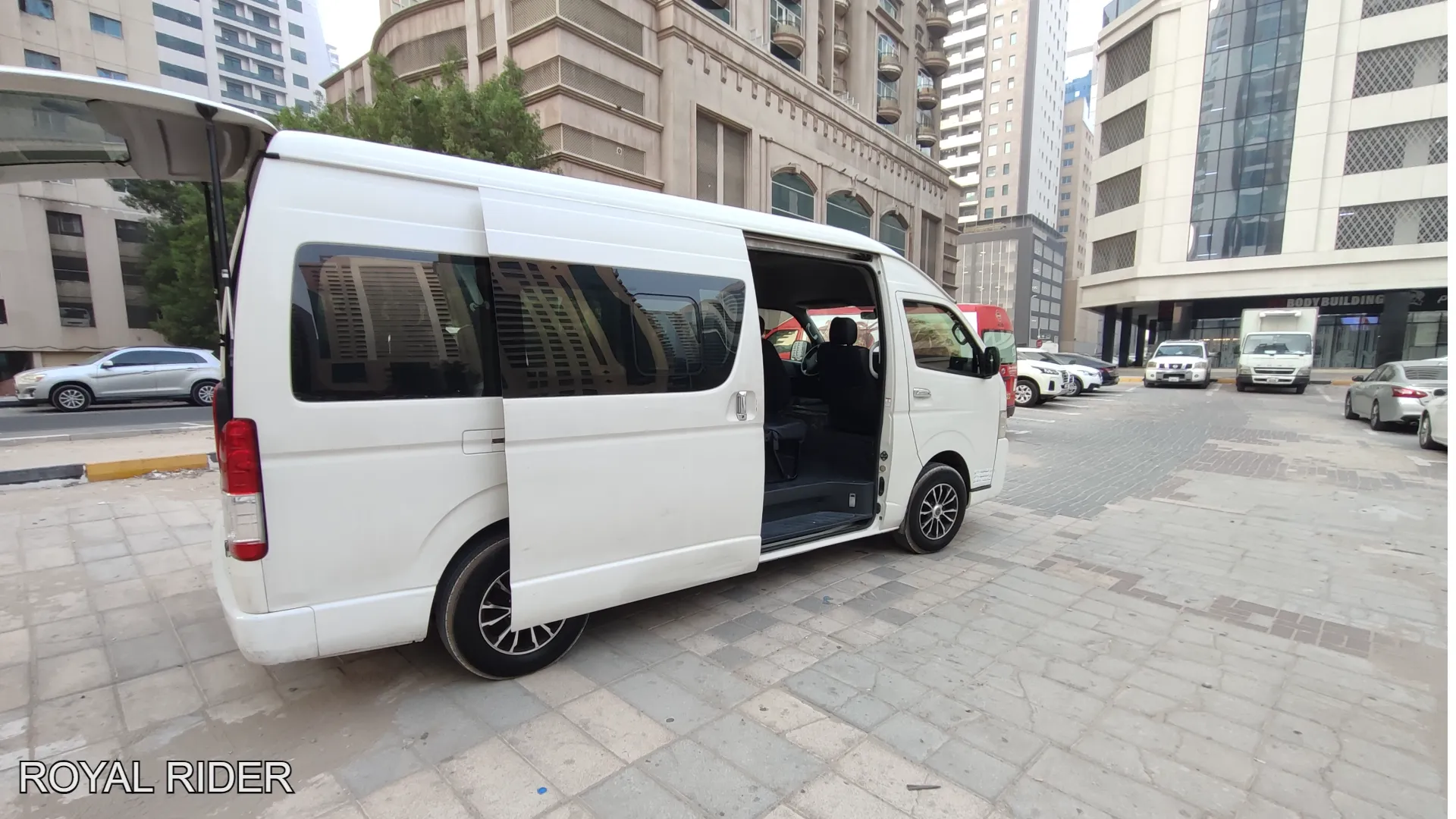
7–15 Seater Passenger Vans
Useful for coaches, officials, small squads, management groups or a support vehicle operating separately from the main team coach.
20–30 Seater Minibuses
A practical range for youth teams, academies and medium groups when passengers and equipment fit the assigned vehicle configuration.
33–35 Seater Buses
Suitable for many full-team movements where the squad, coaches and support staff can travel together with an appropriate luggage plan.
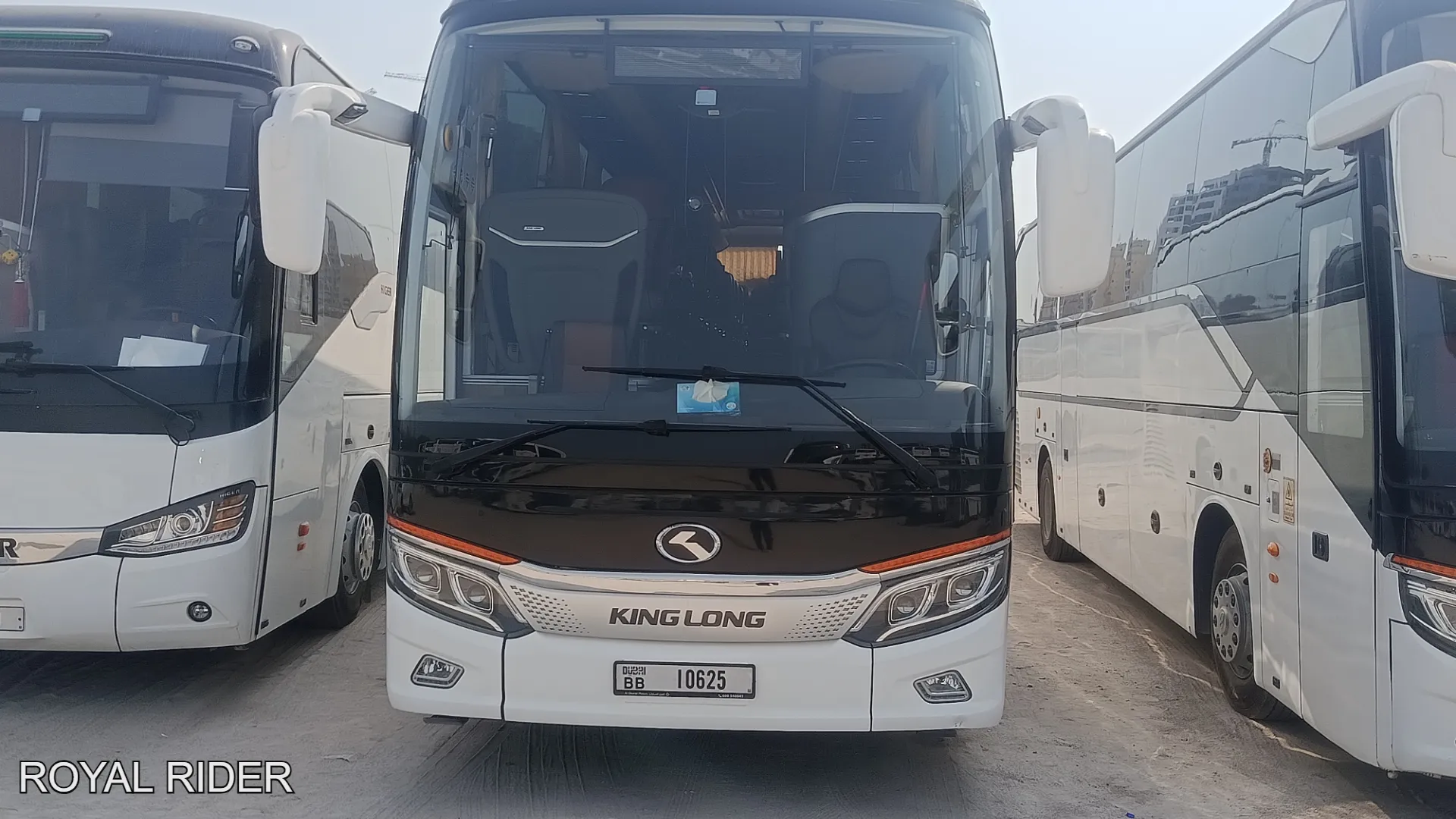
45–53 Seater Coaches
Useful for large squads, tournament groups, longer UAE journeys and teams that need more passenger capacity and coach-style storage.
Passenger Coach + Equipment Vehicle
A strong option when bicycles, boxes, large kit bags or specialist equipment would otherwise consume too much passenger-vehicle storage.
Multiple-Vehicle Team Plan
A coach plus van can separate players from management or allow different schedules without moving the entire team for every journey.
Sports Transport Fleet
Vehicle Options for Small and Large Teams
From Training to Tournament Day
How Sports Transport Operations Change by Schedule
Training Transfers
Plan accommodation-to-training-ground travel around the team’s required arrival, warm-up or preparation time, then confirm the return collection window.
Match-Day Transport
Build in loading time, traffic, venue access and the team’s pre-match preparation window. The required venue arrival time is more useful than the public match start time.
Multi-Day Tournaments
Create a daily movement sheet covering hotel departures, training, matches, recovery sessions, functions and any changes of venue.
Training Camps
Coordinate airport arrivals, hotel transfers, repeated training movements, equipment logistics, rest periods and final departure transfers as one plan.
Match-Day Timing
Plan Backwards From the Required Venue Arrival
A team that must be inside a venue at 16:00 should not simply choose a pickup time from the driving time shown on a map. The movement also includes assembling the group, loading kit, traffic variability, coach access, unloading and walking from the drop-off point to the team area.
For important fixtures, give the transport provider the team’s required arrival time and the pickup location. The operating plan can then be built backwards. After the event, agree whether the vehicle waits, returns at a specified time or operates under another agreed arrangement.
Different Sports, Different Loads
Transport Planning by Sport
Football Teams
Count the full squad, coaching and medical team, then allow for shared kit, match equipment and any separate staff movements.
Rugby Teams
Larger squads and substantial kit can make a full-size coach practical, especially for tournament days and inter-emirate travel.
Cricket Teams
Cricket bags and protective equipment can be bulky. Storage planning is especially important when the team is also travelling with suitcases.
Cycling & Triathlon
Bicycles, bike boxes, wheels and tools can require a separate cargo solution rather than trying to place all equipment inside the passenger vehicle.
Swimming Teams
Plan hotel, pool, training and competition transfers around session times, recovery periods and any split schedules for athletes and staff.
School & Academy Teams
Organized youth sports travel should include the complete passenger count, responsible adults, venue details, timings and the applicable transport requirements.
Airport & Inter-Emirate Travel
Plan Team Arrivals, Hotels and UAE Competition Routes Together
Airport transportation is often the first movement of a sports camp or tournament, and it is also the journey with the highest luggage load. A team arriving with personal suitcases, shared kit and specialist sports equipment may need a larger vehicle or an additional luggage solution even when the passenger count itself looks modest.
Provide flight details, terminal, passenger count and equipment before the arrival plan is confirmed. See group airport transportation for group arrival and departure planning.
For inter-emirate fixtures, the schedule should also account for the longer operating window. Dubai-to-Abu Dhabi, Sharjah-to-Dubai and other UAE sports movements should be quoted from the actual route, stops, waiting requirement and vehicle size and type rather than from a generic sports-team price.
One Coach or Several Vehicles?
Keep the Team Together When It Helps — Split the Operation When It Does Not
One coach simplifies headcounts and keeps the squad together when everyone follows the same schedule. It can be especially useful for match-day travel, where coaches want players and staff to arrive as one group.
Multiple vehicles become useful when operational needs differ. Management may need to leave a hotel earlier, a physio may travel separately, equipment may need its own cargo space, or airport arrivals may be split across flights. For very large groups, see large-capacity transportation information for coordinating multiple buses as one movement plan.
Avoid These Planning Errors
Common Sports Team Transportation Mistakes
✔
Counting Players Only
Include every coach, manager, medical staff member and coordinator who needs a seat.
✔
Ignoring Equipment
Seats do not tell you whether bikes, kit bags or oversized cases will fit.
✔
Using Match Start as Arrival Time
Teams normally need to arrive well before the public start time for preparation.
✔
No Return Plan
Confirm waiting, pickup location and the post-event departure arrangement before travel.
✔
No Single Coordinator
Use one team contact for schedule updates and operational communication.
✔
Comparing Quotes Without Scope
Check vehicle, hours, route, waiting, parking and inclusions before deciding that two prices cover the same service.
Sports Transport Pricing
Why There Is No Single Daily Price for Every Team
The cost of sports transportation depends on the assigned vehicle, route, service duration, number of daily movements, waiting time, airport or venue requirements and whether additional vehicles are needed for staff or equipment. A direct hotel-to-stadium transfer is a different operation from a bus committed to a team for training, a match and a late return.
For that reason, sports-team pricing should reflect the actual transport requirement. Check current vehicle and journey estimates through the Royal Rider rates portal, then provide the complete sports itinerary for an operational quotation.
Send These Details
Sports Team Transport Booking Checklist
✔
Passenger Manifest
Total athletes, coaches, staff and other travellers.
✔
Equipment List
Kit bags, bikes, golf bags, cricket gear, medical cases and oversized items.
✔
Full Itinerary
Airport, hotel, training, match, recovery and event locations in sequence.
✔
Required Arrival Times
State when the team must be at each venue, not only the activity start time.
✔
Return & Waiting Plan
Explain expected finish times and whether the vehicle needs to remain available.
✔
Contact Person
Provide the team manager or transport coordinator’s mobile number.
Sports Transport FAQs
Frequently Asked Questions
Answers to common questions about team size, sports equipment, vehicle choice, training transfers, tournaments, airports and booking sports transportation in the UAE.
What is sports team transportation in the UAE?
Sports team transportation is planned private transport for players, coaches, managers and support staff travelling to training sessions, matches, tournaments, camps, airports, hotels and sports venues. The vehicle plan should account for both people and equipment.
What bus size is best for a football team?
The best size depends on the full travelling party, not only the starting players. Count substitutes, coaches, medical staff, management and equipment before choosing a minibus, mid-size bus or full-size coach.
What bus should a 30-person sports team book?
A group of about 30 people may need a medium or larger bus depending on the exact seat configuration and the volume of kit. If the group carries bulky equipment or many suitcases, a larger vehicle can be more practical than selecting a bus by seats alone.
Can coaches and support staff travel with the players?
Yes. Coaches, physios, managers and other support staff can travel with the team when they are included in the passenger count and the selected vehicle has suitable capacity.
Can sports equipment travel on the same bus?
Often yes, but the answer depends on the type and volume of equipment and the storage layout of the assigned vehicle. Large kit bags, bicycles, golf bags, cricket equipment and oversized cases should be declared before booking.
How do you transport bicycles with a sports team?
Bicycles require advance planning because assembled bikes and bike boxes use substantial space. Depending on the group and vehicle, the practical plan may use a larger coach, reduced passenger loading or a separate cargo or equipment vehicle.
Do cricket kit bags need extra luggage space?
Yes. Cricket kit bags can be bulky, so they should be counted separately from normal passenger luggage. The booking team should know the number and approximate size of kit bags before confirming the vehicle.
Is a 50-seater coach suitable for a sports team?
A 50-seater coach can suit a large squad, coaching team and support staff, especially for longer journeys. Suitability still depends on the assigned coach configuration, passenger count and equipment volume.
Should a sports team use one coach or multiple vehicles?
One coach is convenient when the full group and equipment fit safely and the schedule is shared. Multiple vehicles can be better when staff have different timings, equipment is bulky, or airport, hotel and venue movements need to operate independently.
Can a separate cargo or luggage vehicle be arranged?
A separate equipment or cargo vehicle can be considered when sports gear would use too much passenger-vehicle storage. The requirement should be discussed in advance so the complete transport plan can be quoted correctly.
Can sports teams arrange airport transfers in Dubai?
Yes. Airport transfers can be planned for teams arriving or departing through Dubai, with vehicle choice based on the passenger manifest, flight timing, suitcases and sports equipment.
Can sports teams travel between Dubai and Abu Dhabi?
Yes. Inter-emirate sports transport can be planned between Dubai, Abu Dhabi and other UAE destinations. The quotation depends on the route, operating time, stops, waiting and vehicle size and type.
Can a bus be used for daily training transfers?
Yes. A team can arrange scheduled hotel or accommodation transfers to training grounds and return journeys. Repeated training movements should be planned around the actual session timetable and required arrival time.
Can transport be arranged for multi-day tournaments?
Yes. Multi-day tournament transport can include airport arrivals, hotel transfers, training, match days, recovery sessions, team functions and departure transfers. A day-by-day movement schedule is the best basis for planning.
Can school and academy sports teams book group transport?
Planned group transport can be arranged for school and academy sports activities subject to the required vehicle, schedule and applicable transport requirements. Organizers should provide passenger numbers, responsible adults, venues and timings.
How early should match-day transport arrive?
The pickup time should be calculated backwards from the team’s required venue arrival time, allowing for loading, traffic, access, unloading and any team preparation window. The team manager should provide the required arrival time rather than only the match start time.
What details should a team manager provide for a quotation?
Provide the date, passenger manifest, pickup and destination, required arrival time, return plan, equipment list, luggage count, stops, operating hours and any airport or inter-emirate movements.
How are sports transportation rates calculated?
Rates depend on the vehicle size and type, route, duration, number of movements, waiting, parking, airport or venue requirements and any special equipment arrangement. Current transport estimates should be checked through Royal Rider rates.
Is luggage capacity the same as passenger capacity?
No. A vehicle may have enough seats but insufficient practical storage for every passenger’s luggage and sports equipment. Passenger count and baggage or equipment volume should always be planned together.
What is the biggest mistake when booking sports team transport?
A common mistake is choosing a vehicle only from the number of athletes. The complete plan should include coaches, support staff, luggage, sports equipment, required arrival times, return movements and any schedule changes.
More Sports Transport Information
You May Also Like
Plan the Team Movement
Send Your Sports Schedule, Team Size & Equipment List
Share the passenger manifest, equipment, pickup points, venues, required arrival times and return plan so the transport requirement can be matched to a suitable vehicle and operating schedule.